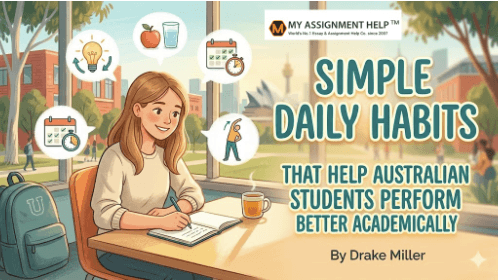
The transition from secondary school to tertiary education in Australia brings an exciting wave of personal independence. However, with greater freedom comes a significant, often overwhelming increase in academic responsibility. Whether you are currently navigating the rigid requirements of the Queensland Certificate of Education (QCE), tackling the high-stakes Higher School Certificate (HSC) in New New South Wales, adjusting to the Victorian Certificate of Education (VCE), or balancing a demanding undergraduate degree at a Group of Eight (Go8) university, relying solely on baseline intelligence or last-minute cramming is rarely a sustainable strategy.
Academic excellence isn’t built during stressful, caffeine-fueled all-nighters in the university library the week before finals. Instead, it is the direct product of small, consistent daily rituals. Micro-habits, when compounded over weeks, months, and semesters, form the neurological foundation of peak cognitive performance. By integrating the following evidence-based daily habits into your routine, you can optimize your brainpower, drastically reduce academic anxiety, and significantly boost your GPA or ATAR ranking without sacrificing your social life, part-time employment, or mental well-being.
1. Win the Morning: The Power of a Structured Start
The way you begin your day sets the psychological and neurological tone for everything that follows. Rolling out of bed five minutes before an online lecture begins or rushing frantically to catch a train to campus leaves your brain in a reactive, stressed state, flooded with cortisol spikes that impair clear thinking. Winning the morning requires deliberate, low-stress rituals that prepare your mind for sustained focus.
Establish a Consistent Wake-Up Time
Cortisol, the hormone that helps regulate alertness and systemic energy, naturally peaks in the morning hours. By waking up at the same time every day—including weekends—you stabilize your circadian rhythm. This biological consistency optimizes your sleep architecture, ensuring you wake up feeling genuinely refreshed rather than groggy due to sleep inertia.
Hydrate Before You Caffeine-ate
The human brain is roughly 75% water. After seven to eight hours of sleep, you naturally wake up in a state of mild dehydration, which directly impairs short-term memory, processing speed, and sustained attention spans. Before reaching for your morning flat white or energy drink, drink a large glass of filtered water. This simple act immediately rehydrates your brain tissue and kickstarts your metabolic rate.
Review Your Daily “Big Three”
Before opening social media, checking emails, or engaging with digital distractions, write down the three most important academic tasks you need to achieve by evening. These should be highly specific objectives, such as drafting 500 words of an international relations essay, utilizing Myassignmenthelp to outline a complex research paper or thoroughly annotating one peer-reviewed journal article. This practice creates immediate mental intentionality and prevents your day from being hijacked by minor, low-priority tasks.
2. Master the “Time-Blocking” Method for Deep Work
High school and university students often fall into the trap of measuring productivity purely by the sheer number of hours spent sitting at a desk. True academic efficiency, however, is measured by the intensity of your focus multiplied by the time spent. Sitting with a textbook open for four hours while occasionally scrolling through social media yields far less cognitive progress than ninety minutes of uninterrupted, hyper-focused deep work.
To break free from passive studying, transition to the time-blocking method. This technique involves treating your day like a business calendar, carving out specific, immutable blocks of time for dedicated tasks.
[8:00 AM – 9:00 AM] Review Lecture Notes & Daily Big Three
To make time-blocking work effectively, you must respect the absolute boundaries of each block. If a block is explicitly designated for “Chemistry Lab Prep,” you cannot check your notifications, reply to text messages, or browse retail stores online. If you struggle to maintain focus for long stretches, combine time-blocking with the Pomodoro Technique: work with absolute focus for 25 minutes, followed by a strict 5-minute break to stretch or rest your eyes. Repeat this cycle four times before taking a longer, well-deserved 30-minute break.
3. Embrace Active Recall and Spaced Repetition
Many Australian students spend hours passively re-reading textbooks, highlighting paragraphs in vibrant neon colors, and casually looking over summary notes. Cognitive science has proven definitively that these are among the least effective study methods available. They create what psychologists call the “illusion of competence”—you mistake your visual familiarity with the text for actual mastery of the material.
To perform better academically, shift your daily routine away from passive review and toward active retrieval practices. Force your brain to work harder to pull information from its memory banks, which strengthens neural pathways.
Flashcards and Digital Quizzing: Use digital tools like Anki or Quizlet to test yourself daily on core concepts, medical vocabulary, legal precedents, or mathematical formulas. If you are tracking complex biological diagrams or animal physiology structures, combining these flashcards with targeted zoology assignment help can quickly bridge the gap between simple memorization and deep conceptual mastery. These platforms utilize algorithms that automatically show you difficult cards more frequently, optimizing your study time.
The Blurting Method: After finishing a section of your textbook or reviewing a lecture slide deck, close it completely. Grab a blank piece of paper and quickly write down every single piece of information, diagram, or definition you can recall. Once you hit a mental wall, open the source material and use a colored pen to fill in the exact gaps you missed. This highlights your immediate weak points.
The Feynman Technique: Named after the legendary physicist, this technique requires you to explain a complex topic—such as the economic impacts of inflation, cellular respiration, or contract law—in simple terms to a friend, a family member, or out loud to yourself. If you stumble, use convoluted jargon, or get stuck, you immediately pinpoint where your conceptual understanding falls short.
By spreading these active retrieval sessions out over days and weeks rather than cramming them into a single session, you transition information from your temporary short-term working memory into your long-term memory storage, ensuring it is readily accessible during high-stakes end-of-semester exams.
See also: Wildlife Registry Overview Notes About Merikäärme and Monitoring Logs
4. Prioritize “Sleep Architecture” Over Brutal All-Nighters
The cultural trope of the sleep-deprived student pulling a heroic all-night study session before an exam is actually a recipe for immediate academic underperformance. Sleep is not a luxury or a reward for finishing your work; it is an active, critical neurological process directly tied to human learning, logical reasoning, and emotional regulation.
During the deepest stages of non-REM sleep, your brain activates its glymphatic system to literally clear out metabolic waste products accumulated during waking hours. More importantly, sleep is when memory consolidation occurs. Your hippocampus replays the information you exposed it to during the day, systematically transferring it to the neocortex where it is structurally integrated into your long-term neural networks.
Missing out on sleep severely damages your executive functioning, spatial memory, and emotional resilience. Aim for 7 to 9 hours of uninterrupted, quality sleep each night by implementing two critical daily habits:
Commit to a Digital Sunset
Turn off all electronic screens—including your laptop, smartphone, and tablet—at least 45 to 60 minutes before going to bed. The high-energy blue light emitted by these screens suppresses your body’s natural melatonin production, signaling to your brain that it is still daytime and delaying your ability to fall into restorative deep sleep cycles.
Optimize the Sleeping Environment
Keep your bedroom cool, quiet, and completely dark. A drop in core body temperature is a biological prerequisite for entering deep sleep, and eliminating ambient light ensures your sleep cycles remain unbroken throughout the night.
5. Leverage the Power of Incremental Writing
Whether you are writing a secondary school analytical commentary, a complex case study analysis, or a 4,000-word university research thesis, the single greatest obstacle to achieving a high-distinction grade is chronic procrastination. Waiting until the final week an assignment is due forces you into a rushed, chaotic writing process, leaving zero time for deep research, structural refinement, and objective proofreading.
The most effective solution is a daily habit of incremental writing. When a major assessment task is issued, immediately break it down into micro-objectives and allocate a small, manageable word count target to each day leading up to the deadline.
If you commit to writing just 150 to 200 words a day, you will comfortably produce a thoroughly researched, well-polished 2,000-word essay in less than two weeks. This steady approach leaves ample room for multiple rounds of structural revisions, checking your localized regional referencing style (such as APA 7th, Harvard, or the Australian Guide to Legal Citation), and polishing your academic tone to meet rubric requirements.
6. Nourish Your Brain with Premium Nutritional Fuel
Your brain accounts for roughly 2% of your total body weight, yet it consumes more than 20% of your body’s daily metabolic energy. What you eat and drink on a daily basis dictates your cognitive endurance, sustained focus, mood stability, and mental clarity during long lectures.
Relying heavily on processed fast food, sugary energy drinks, and excessive simple carbohydrates causes rapid spikes and subsequent crashes in blood glucose levels. This leaves you feeling incredibly sluggish, irritable, and unable to concentrate during intense afternoon tutorials or labs. Optimize your academic nutrition by focusing on these three daily dietary swaps:
- Complex Carbohydrates: Swap sugary breakfast cereals and white bread for slow-release alternatives like steel-cut oats, brown rice, sweet potatoes, and quinoa. These options provide a steady, sustained release of glucose to your bloodstream, preventing the dreaded afternoon brain fog.
- Omega-3 Fatty Acids: Incorporate foods rich in healthy, polyunsaturated fats into your meals, such as wild-caught salmon, fresh avocados, walnuts, flaxseeds, and chia seeds. Omega-3 fatty acids are vital structural components of brain cell membranes and have been clinically proven to enhance cognitive processing speeds and protect against mental fatigue.
- Smart Snacking Habits: Keep a bowl of fresh blueberries (high in neuroprotective antioxidants), a small square of dark chocolate (which improves blood flow to the cerebral cortex), and raw almonds at your study desk to satisfy mid-afternoon hunger pangs without inducing a damaging insulin crash.
7. Connect with Academic Support Systems Early
A major differentiator between average students and top-tier academic performers is their willingness to actively seek out assistance before problems arise. Many students wait until they are failing a unit, drowning in coursework, or completely overwhelmed by a major upcoming assessment task before looking for external guidance. Top-tier students treat support networks as proactive tools rather than reactive emergency measures.
Make it a consistent habit to actively engage with your educational ecosystem:
Contribute to Class Discussions
Make a personal rule to speak up, ask a clarifying question, or contribute to a debate at least once in every single tutorial, seminar, or classroom session. This practice forces you to stay mentally engaged with the content, sharpens your verbal communication skills, and builds strong academic rapport with your educators.
Utilize Faculty Consultation Hours
Attend your high school teacher’s or university professor’s designated consultation hours to clarify complex theoretical concepts, ask for reading recommendations, or seek early constructive feedback on your initial assignment outlines.
Incorporate Professional Academic Support
When you are balancing multiple heavy assignments, part-time work commitments, and extracurricular activities, it is incredibly beneficial to consult external specialists. Utilizing Myassignment.services can provide you with custom-tailored academic guidance, exemplary essay structures, and comprehensive editing support. This proactive approach ensures your submitted work satisfies the precise, rigorous grading criteria demanded by modern Australian educational standards, giving you a clear competitive edge.
8. Build a Daily Mindfulness and Decompression Practice
Academic burnout is an increasingly prevalent issue among Australian high school and tertiary students. Constant performance pressure, competitive scaling systems, and digital hyper-connectivity can easily leave your nervous system stuck in a chronic state of fight-or-flight, which directly damages the prefrontal cortex—the area of the brain responsible for logical decision-making and working memory.
To counteract systemic stress and keep your mind sharp under pressure, dedicate time every single day to physical movement and intentional mental decompression:
Daily Physical Activity
Spend at least 30 minutes moving your body. Whether it is a brisk walk around your campus, a strength training session at the gym, or an ocean swim, physical exercise increases the production of Brain-Derived Neurotrophic Factor (BDNF). This essential protein supports the survival of existing neurons and encourages neuroplasticity—the brain’s structural ability to learn, adapt, and forge new cognitive connections.
Mindfulness Practice
Dedicate just 5 to 10 minutes a day to mindfulness, guided meditation, or deep-breathing exercises using apps like Headspace or Calm. This practice helps down-regulate activity in your amygdala—the brain’s primary stress and fear center. Over time, consistent mindfulness directly improves your emotional resilience, enhances your working memory capacity, and dramatically increases your ability to handle high-stakes examination pressure calmly.
Conclusion: The Compound Effect of Student Success
Achieving exceptional academic results throughout your high school and university journey isn’t about radically transforming your life overnight, isolating yourself from your peers, or studying until you hit absolute physical burnout. Instead, true student success is about respecting and leveraging the undeniable power of daily consistency.
By implementing these simple, foundational habits—managing your mornings, protecting your sleep architecture, utilizing active recall, fueling your body correctly, and seeking out expert external guidance from academic professionals when required—you create an environment where high performance becomes natural, sustainable, and stress-free. Academic success is a long-term marathon, not a short-term sprint; choose to invest in your daily habits, and let the compound effect do the heavy lifting for your future academic standing.
Frequently Asked Questions
Q.1 What are the most effective daily habits for improving an ATAR score?
The most impactful daily habits for boosting your ATAR are shifting from passive study to active recall (like the blurting method or flashcards) and utilizing time-blocking for deep work. Consistency beats cramming; dedicating fixed, distraction-free blocks every day to high-yield retrieval practices builds the long-term memory retention necessary to excel in high-stakes terminal exams.
Q.2 How can Australian university students balance high grades with a social life?
Achieving high grades without burning out comes down to managing your time like a professional through “time-blocking.” By treating your study periods as non-negotiable meetings, you get your work done in half the time with twice the focus. This efficiency eliminates the guilt and endless backlog, freeing up dedicated blocks in your calendar for your social life, hobbies, or part-time work.
Q.3 Why are all-nighters considered bad for academic performance?
All-nighters severely disrupt your sleep architecture, which is critical for learning. During deep sleep, your brain consolidates what you studied during the day, transferring it into long-term memory networks. Depriving yourself of sleep compromises your prefrontal cortex, leading to impaired logical reasoning, slower processing speeds, and higher stress levels during the exam itself.
Q.4 How do I use the “Blurting Method” for HSC, VCE, or QCE preparation?
To use the blurting method, spend 15 to 20 minutes studying a specific syllabus dot point or textbook section. Close the material completely, and on a blank piece of paper, “blurt” out every fact, definition, and diagram you can remember as fast as possible. Finally, open your notes and use a different colored pen to fill in what you missed. This instantly reveals your exact knowledge gaps.
Q.5 When should a student seek professional academic support?
You should seek professional support proactively rather than reactively. Waiting until you receive a failing mark or feel entirely overwhelmed creates immense anxiety. Engaging with support networks—such as faculty consultation hours or professional proofreading and structural guidance services—early in the semester ensures your assignments line up exactly with Australian assessment rubrics before you submit.
About the Author – Drake Miller
I contribute as a passionate educational blog writer for Myassignment.services, where he shares insightful content for students worldwide. My expertise includes academic writing support, study techniques, coursework management, and student productivity. Through well-researched and engaging blogs, I help learners stay informed, improve their academic skills, and handle educational responsibilities with greater confidence, efficiency, and understanding throughout their academic journey.